

Size: 0.98MB
License: FREE
Publisher: Publisher | Listed Programs
Release Date: 2016-04-26
Submit Date: 2016-05-09
OS: Windows 7/8/8.1/10 (32-Bit/64-Bit)
Downloads: 3236
Popularity:
If you would like to open, read and recover your e-mails from an Outlook data file you had previously stored, then Outlook Backup Restore will come in handy. The software will help you pull a few e-mails from OST or PST archive without having to synchronize all your old messages to new e-mails.
PST and OST archives are useful in storing data on a local drive, allowing you to work offline until you need to connect to your Exchange server. However, you may find it difficult to extract just part of the information you want from the archives without synchronizing everything, which may be inconvenient.
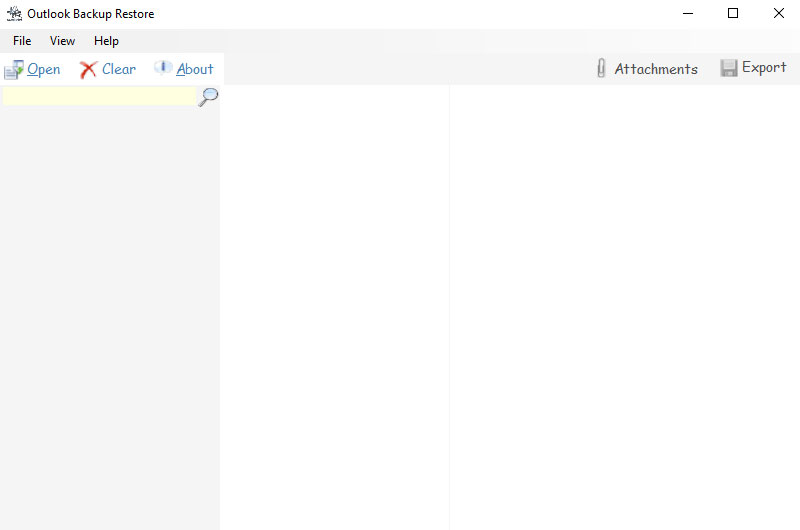
Outlook Backup Restore will give you the opportunity to extract the type of data you want, such as notes, messages calendar items and contacts. The application’s minimalistic user interface features an ‘Open’ button for browsing the file system. Use it to locate the required Outlook data file.
If you do not know where the archive you want is located, you can search for it either via the programs Mail Control Panel or by typing ‘mail’ in the start menu to get available options.
The program will display the folders in the loaded archive and the number of messages in each folder. You can select any of the folders by clicking on its name. If it contains e-mails, they will populate the e-mail list area. Clicking an e-mail displays its contents in the preview area.
Outlook Backup Restore allows you to edit the contents of the displayed email and save the modified version on your hard disk. The edits you make do not modify the original archive, so you should not worry about deleting important messages even if you are a novice.
The program includes an Attachments Manager that you can use to open attachments. You can also save the attachments with new names anywhere on the hard disk.
System Requirements
- Both 32-bit and 64-bit versions of Windows 7, 8 and 10
- Microsoft .NET Framework 4.0 or later